Just to recap, back in 2016 I mentioned Bradken three times.
I first mentioned them at 84 cents here...http://kenhorlor.blogspot.com/2016/04/risky-asx-stcoks-worth-checking-out.html
Then I followed up in June http://kenhorlor.blogspot.com/2016/06/advantages-of-investing-in-stocks.html and November http://kenhorlor.blogspot.com/2016/11/update-advantages-of-investing-in-stocks.html
Note that in October 2016 Bradken came under takeover interest by Hitachi Construction Machinery and the full sale was completed in early 2017. Any investor acting upon my initial pick at 84 cents, would have nearly quadrupled their money. The sale price was $3.25 (Australian Dollars).
My hypothetical $135,000 invested in Bradken would be $513,000 less than a year later. Sometimes I even surprise myself with this stuff.
June 23, 2017


June 21, 2017
Pike River Latest
The latest video footage from inside the Pike River mine is interesting to say the least. There is at least one wooden pallet still intact which means the temperatures inside the mine weren't that hot after all. It's quite likely there are bodies down the mine. There really is no reason for the continued refusals to enter the mine.
Has there been a cover up? It certainly looks that way but I don't see what exactly is being covered up.
The very weak and ineffectual New Zealand Prime Minister Simon "Bill" English should finally do something. New information and all that. But then with English's performance this past week regarding the Todd Barclay matter, I wouldn't be holding my breath.
Has there been a cover up? It certainly looks that way but I don't see what exactly is being covered up.
The very weak and ineffectual New Zealand Prime Minister Simon "Bill" English should finally do something. New information and all that. But then with English's performance this past week regarding the Todd Barclay matter, I wouldn't be holding my breath.
June 15, 2017
New Zealanders - Investing and Buying a House
This post is directed at New Zealanders and permanent residents of New Zealand. You're bombarded daily with what amounts to rubbish about what you should do with your money. My advice, ignore them and do what you're already doing. Whatever it is it's likely to be better than the advice you're receiving, that's how bad most advice is.
But if wondering how to structure your thinking, then read on. I'm assuming you make all your decisions yourself and make all your investments directly where possible. You do this right? If not then you're likely to come up short of expectations as an entire industry in New Zealand is devoted to fleecing you and everyone else.
So let's get started. Consider the young family, two children of school age with one parent working fulltime on less than $50,000 a year. Can you get ahead and buy a house? The answer is yes and here's how:
1. Live within your income at all times. Do not borrow, never use the credit card. Do not take expensive holidays and if you do go on holiday make it the neighbouring beach town and its cheapest motel (not camping, that's expensive). Only buy real food and only eat just enough. Do not buy so much you throw stuff out. Use water to clean (warm water is the world's best solvent, proven so by Chemists), do not buy cleaning chemicals. If you garden, go to auction rooms and such and buy secondhand tools, secondhand furniture, use Trade Me to buy stuff others are throwing out (it's often quite good).
For clothing visit the thrift stores such as the Salvation Army. They often sell new clothing for $1 or $2 an item. How this works is tourists throw away items that won't fit in their suitcase, the 'Sallies' collect the clothing up and then distribute them around their stores. We're talking name brands here, but you have to be patient and visit the stores regularly. In electronics for that all-important laptop computer, look for ex-lease sales or get the latest cheap deal from Warehouse Stationery online. The latter deliver very promptly and can be much cheaper than in store. Never get carried away with electronics, do not buy Sky TV, better still buy a cheap DVD player and buy cheap DVD's in the bargain bins once a month. This is entertainment, and use Trade Me to buy a cheap TV. Another source of electronics, bicycles and stuff is the local Pawn shop. They're always looking to unload their unredeemed items.
A family which lives like this can exist and even save if they follow my advice. Own only one car and make sure it's a small Toyota or Subaru. They never break down.
Furthermore, live in a small regional town, get out of Auckland.
2. Kiwisaver, that's the compulsory retirement saving taken from your income each week, just pay the minimum. Have it paid into a conservative fund, or possibly a balanced growth fund if you're under 40. For older savers just stay conservative as you will be aware markets do melt down and you want to collect this money when you're 65.
3. Register and collect Working for Families. For a family as described above the sum you receive is about $9,000 each year. This is what you save. Remember you are living within your income - right?
Think about how you will receive this money. You have two choices, either take the money in advance weekly based on an estimate of what you will earn, or in a lump sum based on the year gone past. The second option is prudent as you know how much you'll be getting and it comes as a lump sum. With the weekly in advance approach you can end up owing the Inland Revenue money if you get it wrong.
4. Invest in Bonus Bonds. That's because Bonus Bonds do not impact your Working for Families entitlement. Just about everything else does; for instance any income from bank interest or dividends from companies reduce the amount your receive. Even sizeable gifts from family reduce Working for Families. But not Bonus Bonds. And you may win a large prize, and if you do you still receive Working for Families. Let this pool of money compound, that means have your prizes from Bonus Bonds be reinvested in more bonds, and then let prizes you win win more prizes.
5. Take a proportion of the $9,000 (suggest $5,000 Bonus Bonds, $4,000 shares) and invest in companies through the New Zealand and Australian stock exchanges. In doing this, look for companies that are solid but have been on the receiving end of bad news recently. The market disproportionately penalises bad news and then gets drunk on good news. These companies won't pay too much in dividends and thus you'll still maximise your Working for Families. Hold these investments for a long time and take any capital returns (that's where the company returns money to you over and above regular dividends) and invest that in more shares. Any company that is taken over, take the money and invest in more shares. Over time your investments grow and they can grow a lot.
The capital gain from the above activity is completely tax free in New Zealand. You bought these companies because they were cheap at the time and you bought to realise income from them over time. You did not speculate and trade in buying and selling shares.
[Example: Steel and Tube It is in trouble over mislabelling of its steel but its earnings are always satisfactory.]
Remember to own these shares directly in your own name. Do not invest in managed funds. Why? With funds you have no control over how they operate and they charge fees which soak up your potential returns.
6. Now you have the stake to buy a house. This came about because you lived within your income at all times, you did not spend unnecessarily, and you claimed what you were entitled to. Then when you did invest you did so largely tax free.
When you do buy a house, up and coming areas are always good, or run down areas of large cities that are gentrifying. For instance, Tauranga or Nelson not Wanganui or Blenheim (sorry Blenheim). In Auckland, think West Auckland; in Wellington think Newtown.
Keep doing 1 through 5 above but take any gains you make and pay off the mortgage. To this end a variable rate floating type of mortgage is best. If you do fix the mortgage rate make sure you can make capital repayments up to a certain sum without penalty. Paying off the mortgage quickly is the best thing you can do, it trumps everything else. A home with an income, such as a small flat attached to the house is also good if you can find such a property (your income rises and Working for Families reduces but you take the rent and pay off the mortgage sooner with higher repayments over a shorter time period).
As the equity in your first home increases, you're now in a position to buy a rental property. You can do this by putting both your own house and the rental acquisition together and borrowing against the combined value. Timed right you can borrow the whole price paid for the rental property you're buying.
Now you're on the path to being wealthy. Your income from employment may have risen with inflation but the wealth you've created was from wise investment and not chasing your tail.
But if wondering how to structure your thinking, then read on. I'm assuming you make all your decisions yourself and make all your investments directly where possible. You do this right? If not then you're likely to come up short of expectations as an entire industry in New Zealand is devoted to fleecing you and everyone else.
So let's get started. Consider the young family, two children of school age with one parent working fulltime on less than $50,000 a year. Can you get ahead and buy a house? The answer is yes and here's how:
1. Live within your income at all times. Do not borrow, never use the credit card. Do not take expensive holidays and if you do go on holiday make it the neighbouring beach town and its cheapest motel (not camping, that's expensive). Only buy real food and only eat just enough. Do not buy so much you throw stuff out. Use water to clean (warm water is the world's best solvent, proven so by Chemists), do not buy cleaning chemicals. If you garden, go to auction rooms and such and buy secondhand tools, secondhand furniture, use Trade Me to buy stuff others are throwing out (it's often quite good).
For clothing visit the thrift stores such as the Salvation Army. They often sell new clothing for $1 or $2 an item. How this works is tourists throw away items that won't fit in their suitcase, the 'Sallies' collect the clothing up and then distribute them around their stores. We're talking name brands here, but you have to be patient and visit the stores regularly. In electronics for that all-important laptop computer, look for ex-lease sales or get the latest cheap deal from Warehouse Stationery online. The latter deliver very promptly and can be much cheaper than in store. Never get carried away with electronics, do not buy Sky TV, better still buy a cheap DVD player and buy cheap DVD's in the bargain bins once a month. This is entertainment, and use Trade Me to buy a cheap TV. Another source of electronics, bicycles and stuff is the local Pawn shop. They're always looking to unload their unredeemed items.
A family which lives like this can exist and even save if they follow my advice. Own only one car and make sure it's a small Toyota or Subaru. They never break down.
Furthermore, live in a small regional town, get out of Auckland.
2. Kiwisaver, that's the compulsory retirement saving taken from your income each week, just pay the minimum. Have it paid into a conservative fund, or possibly a balanced growth fund if you're under 40. For older savers just stay conservative as you will be aware markets do melt down and you want to collect this money when you're 65.
3. Register and collect Working for Families. For a family as described above the sum you receive is about $9,000 each year. This is what you save. Remember you are living within your income - right?
Think about how you will receive this money. You have two choices, either take the money in advance weekly based on an estimate of what you will earn, or in a lump sum based on the year gone past. The second option is prudent as you know how much you'll be getting and it comes as a lump sum. With the weekly in advance approach you can end up owing the Inland Revenue money if you get it wrong.
4. Invest in Bonus Bonds. That's because Bonus Bonds do not impact your Working for Families entitlement. Just about everything else does; for instance any income from bank interest or dividends from companies reduce the amount your receive. Even sizeable gifts from family reduce Working for Families. But not Bonus Bonds. And you may win a large prize, and if you do you still receive Working for Families. Let this pool of money compound, that means have your prizes from Bonus Bonds be reinvested in more bonds, and then let prizes you win win more prizes.
5. Take a proportion of the $9,000 (suggest $5,000 Bonus Bonds, $4,000 shares) and invest in companies through the New Zealand and Australian stock exchanges. In doing this, look for companies that are solid but have been on the receiving end of bad news recently. The market disproportionately penalises bad news and then gets drunk on good news. These companies won't pay too much in dividends and thus you'll still maximise your Working for Families. Hold these investments for a long time and take any capital returns (that's where the company returns money to you over and above regular dividends) and invest that in more shares. Any company that is taken over, take the money and invest in more shares. Over time your investments grow and they can grow a lot.
The capital gain from the above activity is completely tax free in New Zealand. You bought these companies because they were cheap at the time and you bought to realise income from them over time. You did not speculate and trade in buying and selling shares.
[Example: Steel and Tube It is in trouble over mislabelling of its steel but its earnings are always satisfactory.]
Remember to own these shares directly in your own name. Do not invest in managed funds. Why? With funds you have no control over how they operate and they charge fees which soak up your potential returns.
6. Now you have the stake to buy a house. This came about because you lived within your income at all times, you did not spend unnecessarily, and you claimed what you were entitled to. Then when you did invest you did so largely tax free.
When you do buy a house, up and coming areas are always good, or run down areas of large cities that are gentrifying. For instance, Tauranga or Nelson not Wanganui or Blenheim (sorry Blenheim). In Auckland, think West Auckland; in Wellington think Newtown.
Keep doing 1 through 5 above but take any gains you make and pay off the mortgage. To this end a variable rate floating type of mortgage is best. If you do fix the mortgage rate make sure you can make capital repayments up to a certain sum without penalty. Paying off the mortgage quickly is the best thing you can do, it trumps everything else. A home with an income, such as a small flat attached to the house is also good if you can find such a property (your income rises and Working for Families reduces but you take the rent and pay off the mortgage sooner with higher repayments over a shorter time period).
As the equity in your first home increases, you're now in a position to buy a rental property. You can do this by putting both your own house and the rental acquisition together and borrowing against the combined value. Timed right you can borrow the whole price paid for the rental property you're buying.
Now you're on the path to being wealthy. Your income from employment may have risen with inflation but the wealth you've created was from wise investment and not chasing your tail.
June 13, 2017
Matt Barnes - NBA Champion
Yay, my favourite player has just won his first NBA championship ring. Matt Barnes, often traded, never lucky, finally he gets some luck after a long career.
June 10, 2017
UK General Election 2017
Embarrassment for the British Prime Minister Theresa May as she is returned to power on the back of a confidence and supply agreement with the Democratic Unionist Party.
What went wrong? Two things come to mind, the first being Britain was tired of these elections, first the General Election in 2015, then the Brexit referendum, and now this General Election. Call it voter fatigue.
But then the second factor is that Labour's Jeremy Corbyn is a nice guy. Voters know he's genuine. Meanwhile Theresa May comes across as disingenuous. Younger voters flocked to Corbyn because of this factor supported by policies that favoured their interests. Key here was their pledge to scrap university tuition fees.
It looks as if May is now something of a lame duck, the vultures will be circling.
What went wrong? Two things come to mind, the first being Britain was tired of these elections, first the General Election in 2015, then the Brexit referendum, and now this General Election. Call it voter fatigue.
But then the second factor is that Labour's Jeremy Corbyn is a nice guy. Voters know he's genuine. Meanwhile Theresa May comes across as disingenuous. Younger voters flocked to Corbyn because of this factor supported by policies that favoured their interests. Key here was their pledge to scrap university tuition fees.
It looks as if May is now something of a lame duck, the vultures will be circling.
June 09, 2017
Guns in Schools
Nanny State again in New Zealand, now guns in schools are a no go.
http://www.stuff.co.nz/national/education/93425398/education-minister-to-shut-down-guns-in-schools-after-army-gave-rifles-to-children
I really enjoyed my time using guns at school. I learnt a lot about them and that comes in handy today. Having the army turn up is even better.
If you agree I suggest you write to the Minister of Education, Nikki Kaye telling her so, no stamp required if posted within New Zealand. Tell National to pull their heads in and stop being so pathetic.
http://www.stuff.co.nz/national/education/93425398/education-minister-to-shut-down-guns-in-schools-after-army-gave-rifles-to-children
I really enjoyed my time using guns at school. I learnt a lot about them and that comes in handy today. Having the army turn up is even better.
If you agree I suggest you write to the Minister of Education, Nikki Kaye telling her so, no stamp required if posted within New Zealand. Tell National to pull their heads in and stop being so pathetic.

June 07, 2017
The Future of Farming
Farming has little or no future. This is bad news for any country that relies heavily on its farmers and I'll tell you why.
To explain this story I'll start by talking about cars. Cars have changed a lot in the last few years, but if you went back to the days of the Ford Model T and took a driver in a time machine to 2008, a hundred or so years later, that driver from 1908 would easily understand how to drive a modern car, automatic transmissions and all.
But twenty years on and by 2028, the car that drives itself will be commonplace, how technology will have changed and what would our driver from 1908 think then? Would that driver from 1908 even know how to order up such a car without first going into the showroom?
What has this got to do with farming? A lot is the answer. Farmers are not like that driver from 1908, they're stuck in the Middle Ages. Even if you brought forward a farmer from thousands of years ago they'd probably still manage to figure things out.
But wait, we are about to enter an era of rapid technological change that will wipe out agriculture. It's called manufactured food. Not primary produce processed in a factory, but food manufactured (3D printed or whatever maybe in your own home, you'll have cobalt, iron and iodine delivered in sacks) from the basic elements themselves. All we are as a species is carbon based, mostly water (two of hydrogen one oxygen), with other minerals chucked in there. We are now on the threshold of manufactured food from those elements, and the quantity will be practically limitless. That's the end of farming.
This spells doom for any country like New Zealand which nearly made it. From the late 1970's to the mid 1980's its Prime Minister Rob Muldoon knew the country had to industrialise or die, but it didn't listen and turned to relying on its farmers even more than it had in the past. The dairying industry is now its top earner. But hang on, you can make milk, and have it any colour you want without involving cows, or water from the mountains, or fields of grass. Manufactured milk can even be clear like spring water itself. This means countries like New Zealand will cease to exist or become poor overnight, or both.
Who becomes rich? Industrialised countries that own the technology that's who.
To explain this story I'll start by talking about cars. Cars have changed a lot in the last few years, but if you went back to the days of the Ford Model T and took a driver in a time machine to 2008, a hundred or so years later, that driver from 1908 would easily understand how to drive a modern car, automatic transmissions and all.
But twenty years on and by 2028, the car that drives itself will be commonplace, how technology will have changed and what would our driver from 1908 think then? Would that driver from 1908 even know how to order up such a car without first going into the showroom?
What has this got to do with farming? A lot is the answer. Farmers are not like that driver from 1908, they're stuck in the Middle Ages. Even if you brought forward a farmer from thousands of years ago they'd probably still manage to figure things out.
But wait, we are about to enter an era of rapid technological change that will wipe out agriculture. It's called manufactured food. Not primary produce processed in a factory, but food manufactured (3D printed or whatever maybe in your own home, you'll have cobalt, iron and iodine delivered in sacks) from the basic elements themselves. All we are as a species is carbon based, mostly water (two of hydrogen one oxygen), with other minerals chucked in there. We are now on the threshold of manufactured food from those elements, and the quantity will be practically limitless. That's the end of farming.
This spells doom for any country like New Zealand which nearly made it. From the late 1970's to the mid 1980's its Prime Minister Rob Muldoon knew the country had to industrialise or die, but it didn't listen and turned to relying on its farmers even more than it had in the past. The dairying industry is now its top earner. But hang on, you can make milk, and have it any colour you want without involving cows, or water from the mountains, or fields of grass. Manufactured milk can even be clear like spring water itself. This means countries like New Zealand will cease to exist or become poor overnight, or both.
Who becomes rich? Industrialised countries that own the technology that's who.
June 02, 2017
President Trump and the Paris Agreement
President Trump has it right again, his base will be happy with him pulling the US out of the Paris Agreement. Why should the US make all the sacrifices? I've got no argument with climate science but I do take issue with how the science has been adopted by those who want to see the industrialised world sidelined and then neutered.
It's like this; imagine you've worked hard to own a nice house. Someone from down the road with a much poorer house proposes that you be taxed so you can no longer afford to maintain your house, instead your taxes would go to improve the upkeep of the house owned by the person proposing you be taxed. Does this make any sense? No it doesn't, not at all, but this is the sort of thing these climate agreements demand of the developed world.
We could look it another way. How about we demand that Europe fix the climate solely at their cost? They've cut down their trees over the last few thousand years, put the trees back there Europe. The US is a new country, relatively speaking, why should they bear the burden? Imagine the howls of protest from Europe at the prospect.
It's like this; imagine you've worked hard to own a nice house. Someone from down the road with a much poorer house proposes that you be taxed so you can no longer afford to maintain your house, instead your taxes would go to improve the upkeep of the house owned by the person proposing you be taxed. Does this make any sense? No it doesn't, not at all, but this is the sort of thing these climate agreements demand of the developed world.
We could look it another way. How about we demand that Europe fix the climate solely at their cost? They've cut down their trees over the last few thousand years, put the trees back there Europe. The US is a new country, relatively speaking, why should they bear the burden? Imagine the howls of protest from Europe at the prospect.
June 01, 2017
2017 NBA Finals
I'm picking the Cavaliers to take the series 4-2. I like their talent and hunger. The Cavs coasted for part of the season, hence their poorer regular season but they're much better than that. Meanwhile the Warriors only have Kevin Durant as an extra and in the past he's proven to be Mr Absent when it matters. What do you think?
This is how I think the finals will go (famous last words I know):
Game 1 Cavs [Wrong: Warriors 113 - Cavs 91]
Game 2 Warriors [Right]
Game 3 Cavs [Uh oh, Cavs at risk of going out]
Game 4 Cavs [Only the second time I've been right]
Game 5 Warriors [And congrats to the Warriors]
Cavs 4 Warriors 2 [Got this completely wrong]
This is how I think the finals will go (famous last words I know):
Game 1 Cavs [Wrong: Warriors 113 - Cavs 91]
Game 2 Warriors [Right]
Game 3 Cavs [Uh oh, Cavs at risk of going out]
Game 4 Cavs [Only the second time I've been right]
Game 5 Warriors [And congrats to the Warriors]
Cavs 4 Warriors 2 [Got this completely wrong]
May 30, 2017
Europe and President Trump
A benefit of having President Trump in office is that the USA can now clearly see what the US means to Europe. The US is there to pay for the party, that's it. Nothing more than that. Wise up America.
May 27, 2017
Trump Tells NATO
Another one of those I never thought I'd see the day moments has occurred with President Trump telling NATO members they have to front up and pay their share. About time. The look on the assembled faces was hilarious.
It never ceases to amaze me how the US taxpayer pays to protect Europe, then Europe gets to sell their cars in the USA, which puts American auto workers out of jobs. It's true and the Europeans with only a few exceptions have developed this sense of entitlement. With any luck, no longer.
It never ceases to amaze me how the US taxpayer pays to protect Europe, then Europe gets to sell their cars in the USA, which puts American auto workers out of jobs. It's true and the Europeans with only a few exceptions have developed this sense of entitlement. With any luck, no longer.
May 26, 2017
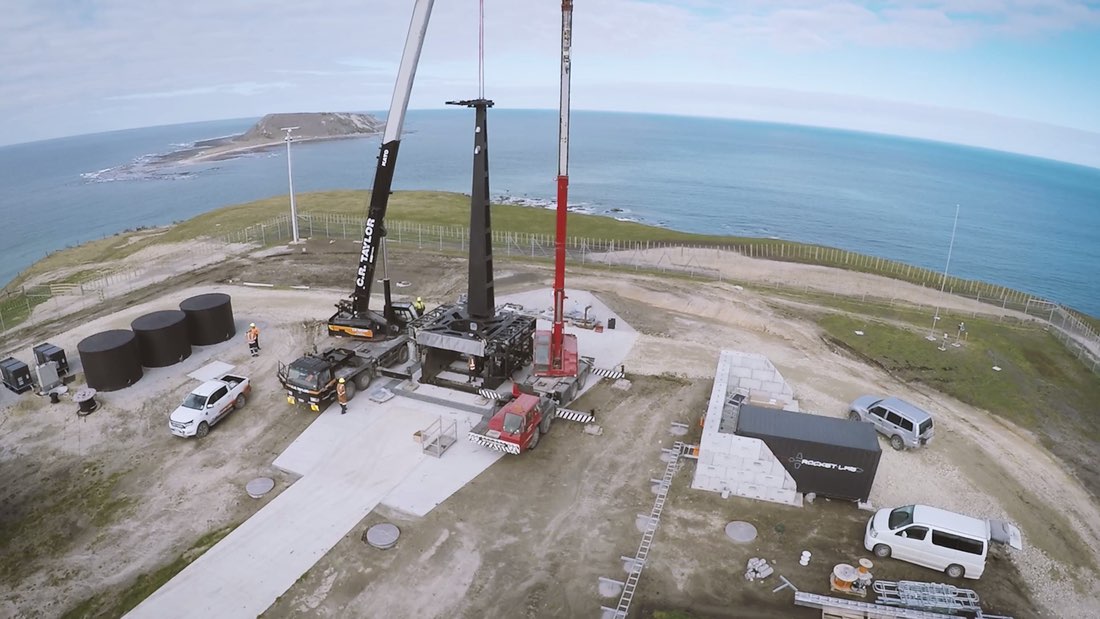
Rocket Lab Launch Successful
New Zealand has entered the space race on a shoestring budget. The NZ-USA company has successfully launched its first Electron rocket which is rated to carry a 150 kg payload when it enters service.
/cdn.vox-cdn.com/uploads/chorus_image/image/54942033/Rocket_Lab_Lift_off_Mahia_Peninsula_2017.0.jpg)
http://spacenews.com/rocket-lab-reaches-space-but-not-orbit-on-first-electron-launch/
One thing the rocket failed to do was enter orbit. I put this down to the following problem - reaching an orbit speed. What is required to enter orbit is described here:
https://what-if.xkcd.com/58/
The article says reaching orbital speed takes much more fuel than reaching orbital height. By this reckoning I'm guessing they ran out of fuel before reaching orbital speed. But it's a great start, the engine and critical pump are made in Auckland and the launch pad is located on the Mahia Peninsula south of Gisborne. The location was likely chosen because the site is surrounded by sea on almost all sides and there is very little commercial flight traffic.
http://spacenews.com/rocket-lab-reaches-space-but-not-orbit-on-first-electron-launch/
One thing the rocket failed to do was enter orbit. I put this down to the following problem - reaching an orbit speed. What is required to enter orbit is described here:
https://what-if.xkcd.com/58/
The article says reaching orbital speed takes much more fuel than reaching orbital height. By this reckoning I'm guessing they ran out of fuel before reaching orbital speed. But it's a great start, the engine and critical pump are made in Auckland and the launch pad is located on the Mahia Peninsula south of Gisborne. The location was likely chosen because the site is surrounded by sea on almost all sides and there is very little commercial flight traffic.
May 25, 2017
Investing in a Container
Sensible or a scam? I've received an email from someone wanting to know, does it make sense to invest in a shipping container, managed offshore by some company with a dubious reputation.
The short answer is, it makes no sense at all. But not for the reason you may be thinking, that it's all a scam and whoever is selling you the idea is going to run off with your money (but they might, you have to be careful). Container transportation has been around for a while and these containers do have numbers and they can be insured. Large companies do own fleets of them and they do manage containers as well. If you buy one or many, this container will disappear into the fleet and become just another number, being hired out to house cargo travelling the world.
But what happens to that container when no longer needed or the management company goes bust? At worst you'll lose the container all together, but the best that may happen is you'll have to pay for it to be delivered to you and then what will you do with it? It gets worse if you own several.
There are many angles, claiming depreciation on the container, whether the container is leased long term to a shipping company, what condition it is maintained in, how it is handled and what kind of container exactly; high cube, flat rack, 20 foot, 40 foot, open sided, open topped, all these have a demand and risk factor attached and differing returns.
Why do this to yourself when you can simply invest in a container company? For the purpose of illustration, consider Royal Wolf who are listed on the Australian Securities Exchange:
https://www.google.com/finance?cid=8109809
Currently they sit on a dividend yield of 3.70%, with a market capitalisation of AUS$135 million. They're active selling and hiring out containers and with a P/E of 18.33 are not expensive by any means. I'd suggest that investing in this company would be safer and provide returns that are better than directly owning the container itself. Think capital gains. But heh, I'm not pumping this stock, just pointing out there are safer ways to go that would be more financially rewarding.
The short answer is, it makes no sense at all. But not for the reason you may be thinking, that it's all a scam and whoever is selling you the idea is going to run off with your money (but they might, you have to be careful). Container transportation has been around for a while and these containers do have numbers and they can be insured. Large companies do own fleets of them and they do manage containers as well. If you buy one or many, this container will disappear into the fleet and become just another number, being hired out to house cargo travelling the world.
But what happens to that container when no longer needed or the management company goes bust? At worst you'll lose the container all together, but the best that may happen is you'll have to pay for it to be delivered to you and then what will you do with it? It gets worse if you own several.
There are many angles, claiming depreciation on the container, whether the container is leased long term to a shipping company, what condition it is maintained in, how it is handled and what kind of container exactly; high cube, flat rack, 20 foot, 40 foot, open sided, open topped, all these have a demand and risk factor attached and differing returns.
Why do this to yourself when you can simply invest in a container company? For the purpose of illustration, consider Royal Wolf who are listed on the Australian Securities Exchange:
https://www.google.com/finance?cid=8109809
Currently they sit on a dividend yield of 3.70%, with a market capitalisation of AUS$135 million. They're active selling and hiring out containers and with a P/E of 18.33 are not expensive by any means. I'd suggest that investing in this company would be safer and provide returns that are better than directly owning the container itself. Think capital gains. But heh, I'm not pumping this stock, just pointing out there are safer ways to go that would be more financially rewarding.
May 24, 2017
Rocket Lab Launch
New Zealand is about to enter the space age with the launch of Rocket Lab's vehicle into orbit:
http://www.stuff.co.nz/business/92884290/rocket-lab-test-launch-postponed-a-second-time

http://www.stuff.co.nz/business/92884290/rocket-lab-test-launch-postponed-a-second-time
May 18, 2017
Ethical Fund or Not?
What is an ethical fund and does anyone really care? An ethical fund is a pool of money taken from many individual investors, the fund then invests in so-called ethical companies. According to this model, tobacco is out but alcohol may be okay because it can be consumed safely if done so within limits.
Then weapons manufacturers are off limits too, because they make products that can kill. Also off-limits is the gaming industry. It's a vice don't you know.
But hang on, does such a fund do any good? What about all those liquor and off-licence vendors being robbed and killed, shouldn't alcohol be on the banned list? For some funds it is, but not others. Strange I'd say, alcohol should be off the list if the fund manager is being consistent.
Tobacco has become the evil of the modern age. But if we ban tobacco and its cultivation, what happens to African countries relying on income from that one crop? Malawi is an example.
And weapons, does anyone really think for one second that because you don't invest in companies that manufacture weapons, that your neighbour who hates you, wants to kill you or take your property won't use those same weapons you eschewed against you? You're not paranoid if the gun is pointing at your head.
Gaming, it's a vice, but what about people who eat meat? They kill animals and consume them, is that any more excusable considering that to live healthy and fruitful lives (see what I did there?) we don't need any meat? And what about pest eradication businesses, don't all living things have a right to live peacefully (channelling Over The Hedge and weapons of mass destruction illegal in every state except Texas).
The point I'm making is that any business model that invents a moral compass based on poor logic, will ultimately fail. It must. I say, invest in good, legal businesses, that are boring, old-fashioned, dominant in their market, deliver quality not too expensively; and if they make nuclear weapons then it's all good, nuclear deterrent works fine by me. Get off your high horse.
According to the Ken Horlor Law of Investment Choices (patent pending), if everyone was right then they'd all be rich but they aren't so they must mostly be wrong most of the time. And given they're nearly always wrong, not doing what they do must be a good idea. So according to this logic, tobacco, hard liquor, nuclear weapons, handguns, casinos and brothels must be the way to go. I'm just pointing out you won't find many bankrupt casino owning nuclear weapons manufacturers. But you'll find a lot of investors tapped out by the latest whizz-bang fund management scheme.
Then weapons manufacturers are off limits too, because they make products that can kill. Also off-limits is the gaming industry. It's a vice don't you know.
But hang on, does such a fund do any good? What about all those liquor and off-licence vendors being robbed and killed, shouldn't alcohol be on the banned list? For some funds it is, but not others. Strange I'd say, alcohol should be off the list if the fund manager is being consistent.
Tobacco has become the evil of the modern age. But if we ban tobacco and its cultivation, what happens to African countries relying on income from that one crop? Malawi is an example.
And weapons, does anyone really think for one second that because you don't invest in companies that manufacture weapons, that your neighbour who hates you, wants to kill you or take your property won't use those same weapons you eschewed against you? You're not paranoid if the gun is pointing at your head.
Gaming, it's a vice, but what about people who eat meat? They kill animals and consume them, is that any more excusable considering that to live healthy and fruitful lives (see what I did there?) we don't need any meat? And what about pest eradication businesses, don't all living things have a right to live peacefully (channelling Over The Hedge and weapons of mass destruction illegal in every state except Texas).
The point I'm making is that any business model that invents a moral compass based on poor logic, will ultimately fail. It must. I say, invest in good, legal businesses, that are boring, old-fashioned, dominant in their market, deliver quality not too expensively; and if they make nuclear weapons then it's all good, nuclear deterrent works fine by me. Get off your high horse.
According to the Ken Horlor Law of Investment Choices (patent pending), if everyone was right then they'd all be rich but they aren't so they must mostly be wrong most of the time. And given they're nearly always wrong, not doing what they do must be a good idea. So according to this logic, tobacco, hard liquor, nuclear weapons, handguns, casinos and brothels must be the way to go. I'm just pointing out you won't find many bankrupt casino owning nuclear weapons manufacturers. But you'll find a lot of investors tapped out by the latest whizz-bang fund management scheme.
May 15, 2017
Predictions
Here are my three main predictions for what will happen technologically within the next 40 or so years. Of course country borders will change, most likely in Africa, but also Europe and North America. If there is a new Dark Age then all bets are off, the Dark Ages were very real and we must guard our knowledge well, Knowledge can be destroyed and often is. Okay, so here goes:
1. We'll be able to fly anywhere very quickly. That is rapid passenger transport. How this will be done is by planes flying very high, out into space before descending to their destination. I've seen the International Space Station racing across the sky and it's an incredible sight, this speed of travel will become commonplace.
2. Communications and entertainment will advance so we can actually experience the movie or have our relatives in the room visiting without them actually being there for real. This could be an experience delivered chemically if not using telecommunications or some such (chemical rather than electronic engineering).
3. Freight will be transported rapidly using ground effects shipping. These will be very large ships that hover rather than sit in the water. Being fast, they'll displace air freight and most container cargo vessels.
What do you think?
In sport, the All Blacks will become so dominant they'll be banned and continue on as a Rugby version of the Harlem Globetrotters (just joking).
1. We'll be able to fly anywhere very quickly. That is rapid passenger transport. How this will be done is by planes flying very high, out into space before descending to their destination. I've seen the International Space Station racing across the sky and it's an incredible sight, this speed of travel will become commonplace.
2. Communications and entertainment will advance so we can actually experience the movie or have our relatives in the room visiting without them actually being there for real. This could be an experience delivered chemically if not using telecommunications or some such (chemical rather than electronic engineering).
3. Freight will be transported rapidly using ground effects shipping. These will be very large ships that hover rather than sit in the water. Being fast, they'll displace air freight and most container cargo vessels.
What do you think?
In sport, the All Blacks will become so dominant they'll be banned and continue on as a Rugby version of the Harlem Globetrotters (just joking).
May 08, 2017
Fix or Float?
It's been mentioned again, should New Zealand's exchange rate be fixed or float as it does now? Comparison has been made with Singapore. There is no doubt that Singapore has done an excellent job, Lee Kuan Yew is one of the great men of the modern age. But whether New Zealand should copy Singapore is open to debate. The NZ Treasury discuss this here: http://www.treasury.govt.nz/publications/research-policy/wp/2011/11-01/10.htm
Those with a long memory will remember NZ had the crawling peg model, which sounds similar to Singapore's basket of currencies.
But what about fixing? For me the advantage of fixing the exchange rate is it provides certainty. Businesses can plan effectively. The problem NZ has, and this has been the case since it floated its currency, is the exchange rate is volatile and the Kiwi dollar is often grossly overvalued. A consistently overvalued currency hurts exporters and leads to cheap imports which hurt local manufacturers producing for the domestic market. Fixing the exchange rate and linking its value to infrastructure spend, or possibly a balance of gold and silver prices, infrastructure and the five major currencies (US, Euro, Yen, Sterling and Swiss Franc) provides certainty, industry can forecast.
Doing a rough back of the envelope calculation; the NZ Dollar should be worth about US$0.62, but today it's quoted at US$0.69; more than 10% overvalued in other words. That's my point, this pattern of overvaluing seriously undermines economic potential, stifling local production and exporters.
Doing a rough back of the envelope calculation; the NZ Dollar should be worth about US$0.62, but today it's quoted at US$0.69; more than 10% overvalued in other words. That's my point, this pattern of overvaluing seriously undermines economic potential, stifling local production and exporters.
May 04, 2017
Australia Kicks New Zealand Again
It's time to say goodbye to Australia. The latest outrage is they've stopped Kiwis at Australian universities from receiving domestic fees, the same fees Australians face.
Many don't know that New Zealanders in Australia generally earn much more than Australians. They're the go-getters, while Australians are shiftless. Think about this; Kiwis in Australia pay more tax, a lot more, but receive few if any services in return.
My answer is it's about time NZ pointed out to Australia that they're surrounded, their only ally is NZ. Why would they constantly blame Kiwis for every ill in their stagnant country?
The answer to this is very basic and may even shock. Winston Peters, leader of NZ First, has it wrong. He says that because NZ allowed a back door into Australia for decades (this is where people gained NZ citizenship solely for the purpose of getting into Australia), that Australia is paying the favour back. No, that's not it. What has happened is that Australians have got used to Kiwis beating them up all the time. In Australia, the boss is often a Kiwi. And then on the sports field, the All Blacks always beat Australia. Well not always but of the last 20 games played, NZ has won 15, Australia 4 with 2 drawn encounters. It must suck to live in a country where draws are your closest rival. And it is likely no coincidence that in the same year as the rug was pulled on these fees, that it is also a year when no Australia team has beaten a NZ rugby franchise is Super Rugby. If any Australian team does win a game against a NZ team the Australians will likely hold a street parade, that's how bad they are.
The NZ Prime Minister, the weak and ineffective Simon English, of course he will kowtow. He's such a horrible little man.
Many don't know that New Zealanders in Australia generally earn much more than Australians. They're the go-getters, while Australians are shiftless. Think about this; Kiwis in Australia pay more tax, a lot more, but receive few if any services in return.
My answer is it's about time NZ pointed out to Australia that they're surrounded, their only ally is NZ. Why would they constantly blame Kiwis for every ill in their stagnant country?
The answer to this is very basic and may even shock. Winston Peters, leader of NZ First, has it wrong. He says that because NZ allowed a back door into Australia for decades (this is where people gained NZ citizenship solely for the purpose of getting into Australia), that Australia is paying the favour back. No, that's not it. What has happened is that Australians have got used to Kiwis beating them up all the time. In Australia, the boss is often a Kiwi. And then on the sports field, the All Blacks always beat Australia. Well not always but of the last 20 games played, NZ has won 15, Australia 4 with 2 drawn encounters. It must suck to live in a country where draws are your closest rival. And it is likely no coincidence that in the same year as the rug was pulled on these fees, that it is also a year when no Australia team has beaten a NZ rugby franchise is Super Rugby. If any Australian team does win a game against a NZ team the Australians will likely hold a street parade, that's how bad they are.
The NZ Prime Minister, the weak and ineffective Simon English, of course he will kowtow. He's such a horrible little man.
May 03, 2017
New Zealand Environment and MMP
New Zealand has a major flaw with its economy and that is it has an anaemic secondary manufacturing sector. NZ does make some things, but not enough of its national income derives from secondary industry. This has a major impact on the environment. To maintain its position as a fully developed OECD economy NZ finds itself having to do two things in the absence of manufacturing; it must flog the land to exhaustion and pollute the rivers.
The intensification of agriculture has got to the breaking point. You will find commentators saying the answer is the service sector and Kiwis doing things smarter. Yes, fine, but NZ is small and isolated, it's hard to get noticed. Its all very well trying to be the next Microsoft or Google but how realistic is that? Not very realistic is my reply, and NZ does not have really big global scale service sectors and I'm thinking banking and insurance. NZ relies on overseas funds from banking and overseas owned insurance companies.
For little NZ, the answer is to extract mineral ores and transform them into metals. Then take those metals and make products from them. Then sell those products worldwide. And if feasible, make those same products in other countries with the design aspect handled in Kiwiland. You may think of Toyota when I say this but I'm thinking Scania. Scania are Swedish heavy trucks and made in factories around the world. But Sweden only has a population of 9 and a bit million. Less than twice the size of NZ. And they have Volvo construction equipment to boot, and on and on. NZ should try to emulate their example.
Will this happen with the current political set-up? Never. The German style of Mixed-member Proportional (MMP) voting introduced in the mid 1990's ensures NZ is stuck with the way it is. The country has professional naysayers in the Greens, refusing to lead or take any responsibility, hogging positions that could be occupied by more able parliamentarians. And contrary to what NZ was promised, the country has rarely had majority governments, instead being led by minority governments hanging on by pleasing the myopic middle ground in order to survive in office. NZ has ended up with the worst of all worlds.
And it will get worse. The day could come where MMP delivers tyranny. One example is where a party receives, say, 60% of the vote but all others fail to get to the 5% threshold. This means all Parliamentary seats would go to the one party making the threshold (in theory but with some seats being won without many party votes, there would be one hell of an overhang in that Parliament). Or how about the ultimate minority party, say one with 35% but the rest unable to garner much more than 10% each, with a large number of votes wasted on parties not making the 5% threshold; meaning the government would rule a country where the overwhelming majority had not voted for it. Incredible, it could actually happen. Who were the fools that foisted this system on the NZ people.
The intensification of agriculture has got to the breaking point. You will find commentators saying the answer is the service sector and Kiwis doing things smarter. Yes, fine, but NZ is small and isolated, it's hard to get noticed. Its all very well trying to be the next Microsoft or Google but how realistic is that? Not very realistic is my reply, and NZ does not have really big global scale service sectors and I'm thinking banking and insurance. NZ relies on overseas funds from banking and overseas owned insurance companies.
For little NZ, the answer is to extract mineral ores and transform them into metals. Then take those metals and make products from them. Then sell those products worldwide. And if feasible, make those same products in other countries with the design aspect handled in Kiwiland. You may think of Toyota when I say this but I'm thinking Scania. Scania are Swedish heavy trucks and made in factories around the world. But Sweden only has a population of 9 and a bit million. Less than twice the size of NZ. And they have Volvo construction equipment to boot, and on and on. NZ should try to emulate their example.
Will this happen with the current political set-up? Never. The German style of Mixed-member Proportional (MMP) voting introduced in the mid 1990's ensures NZ is stuck with the way it is. The country has professional naysayers in the Greens, refusing to lead or take any responsibility, hogging positions that could be occupied by more able parliamentarians. And contrary to what NZ was promised, the country has rarely had majority governments, instead being led by minority governments hanging on by pleasing the myopic middle ground in order to survive in office. NZ has ended up with the worst of all worlds.
And it will get worse. The day could come where MMP delivers tyranny. One example is where a party receives, say, 60% of the vote but all others fail to get to the 5% threshold. This means all Parliamentary seats would go to the one party making the threshold (in theory but with some seats being won without many party votes, there would be one hell of an overhang in that Parliament). Or how about the ultimate minority party, say one with 35% but the rest unable to garner much more than 10% each, with a large number of votes wasted on parties not making the 5% threshold; meaning the government would rule a country where the overwhelming majority had not voted for it. Incredible, it could actually happen. Who were the fools that foisted this system on the NZ people.
May 01, 2017
John Key and Pike River
Now we know why John Key suddenly resigned. The Pike River mine disaster victims families have 30 hours of video footage from inside the access tunnel to the mine. This footage was kept from the inquiry and the New Zealand public until now. The National Party government have been lying to the NZ public all this time. The mine is safe to enter, so what has the government got to hide?